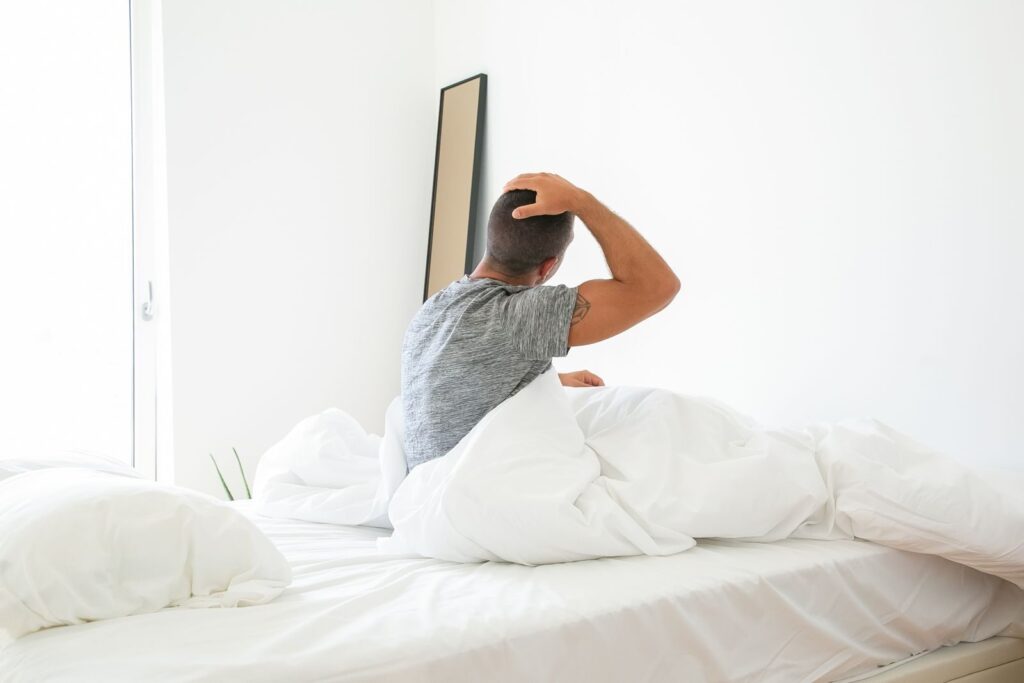
A sore neck from sleeping usually happens when your neck stays in an awkward position for hours, leaving muscles and joints stiff and irritated. It often eases within a few days with gentle movement, heat and a better sleep setup. See a doctor if you have numbness, weakness, fever, severe headache or pain after an injury.
Key Takeaway: A sore neck after sleeping is usually a strained muscle or irritated joint that settles in a few days with warmth, gentle movement and better support at night. A pillow that keeps your head level with your spine may help prevent it. Numbness, weakness, fever or pain after an injury needs a doctor.
Why do you wake up with a sore neck?
A sore neck from sleeping is stiffness and pain after a night in an awkward position, and it is very common. The NHS lists a neck that becomes locked in an awkward position while sleeping as one of the most common causes of neck pain. Understanding what is going on makes it easier to fix and to prevent.
Held positions and irritated tissue
While you sleep, your neck can stay turned or bent for long stretches. The muscles on one side can tighten, and the small joints of the neck may become irritated, which makes turning your head painful when you wake.
The stiffness is often one sided and worse when you look over your shoulder. It tends to ease as you move through the morning.
If one side is far worse, avoid pushing into the sharp spot. Slow, small turns and a warm shower often loosen the area enough to start your day. Notice which side stiffens, because that clue can help you adjust your pillow later.
Why it may happen more at certain times
A new pillow, a hotel bed, a long day at a computer or a stressful week can all make a sore neck from sleeping more likely. Sleeping on a couch or in a car seat is a frequent trigger.
Tight shoulders and long hours at a screen can leave the neck less tolerant of awkward positions. Our post on whether poor posture causes neck pain explains why posture is only part of the story.
How long it usually lasts
The NHS says most neck pain only lasts a few weeks. A simple morning crick often settles sooner, over a few days, while pain that is lingering or returning needs a closer look.
Gentle movement generally helps more than keeping the neck still.
It can help to note how you slept, what your day was like and which side was sore. After a week or two, patterns often show up, such as a particular pillow or an evening at a laptop. Those patterns tell you what to change first.
What is the best sleep position for neck pain?
The best position is one that keeps your head and neck in a neutral line with your spine and lets you stay comfortable. There is no single ideal for everyone. Most people do well on their back or side with the right support.
| Position | Pillow guide | Helpful extra |
|---|---|---|
| On your back | Fills the gap under the neck without pushing the chin down | A small rolled towel under the neck |
| On your side | Thick enough to keep your head level with your spine | A pillow between the knees |
| On your front | Very thin or none; the NHS advises against this position | A pillow under the hips or stomach |
Sleeping on your back
Lying on your back tends to keep the head and neck most evenly supported. Use a pillow that fills the gap under your neck without pushing your chin toward your chest.
A small rolled towel under the neck, with a thin pillow under the head, works for some people.
Sleeping on your side
On your side, the pillow should be thick enough to keep your head level with the rest of your spine. The NHS advises making sure your head is at the same height as the rest of your body when you sleep.
If you sleep on your side, a pillow between the knees can reduce twisting through the spine. Switch sides during the night if you naturally do so.
Sleeping on your front
The NHS recommends not sleeping on your front, because it forces the neck to stay rotated for hours. If you cannot sleep any other way, use a very thin pillow, or none, and place a pillow under your hips or stomach.
Changing a lifelong habit takes time. Try side sleeping with a body pillow to hold you in place.
How do you choose a pillow for a sore neck?
A good pillow keeps your neck in a neutral position and feels comfortable to you. The right height depends on the width of your shoulders and how you sleep. Price and brand matter less than fit.
Height and firmness
The NHS suggests a low, firm pillow for neck pain. Side sleepers usually need more height than back sleepers because of the distance from the ear to the shoulder.
If your neck bends upward or sags downward when you lie down, the pillow is probably the wrong height. Ask someone to check your head and neck position from the side.
Test a new pillow for at least a few nights before judging it, because the neck needs time to adjust. A firm towel roll can be a cheap way to test extra height. Keep notes so the comparison is fair.
What research says about pillows
A randomized crossover trial in 70 adults with chronic nonspecific neck pain compared a spring pillow with educational advice over 4 weeks. Pain in the neck and upper back appeared lower with the pillow.
One trial of one pillow type cannot tell you which pillow to buy, and the study looked at long-standing pain rather than a morning crick. It suggests that the right support may matter, which is a reason to take pillow choice seriously.
Mattress and other sleep factors
The NHS lists a firm mattress among the prevention tips. If your mattress sags or is very old, it may allow the spine to drop out of line.
If you also have back pain, our guide to how to sleep with lower back pain has related positioning ideas.
What helps a sore neck in the morning?
Gentle movement and warmth are usually the most helpful first steps. They aim to loosen the muscles and ease the joints without provoking pain. Avoid forcing the neck or pushing through sharp pain.
Heat, cold and pain relief
The NHS suggests either a pack of frozen peas wrapped in a tea towel for 5 minutes, 3 times a day, or a wrapped hot water bottle for 20 minutes, 2 to 3 times a day. Choose whichever feels better to you.
Pain relief such as paracetamol or ibuprofen gel may help some people. Check with a pharmacist or doctor if you take other medicines or have health conditions.
Gentle morning stretches and movements
- Neck turns: slowly turn your head to look over each shoulder, 5 to 10 times each way, within a comfortable range
- Chin tucks: gently draw your chin straight back as if making a double chin, hold 3 to 5 seconds, 8 to 10 times
- Side bends: tilt your ear toward your shoulder, hold 15 to 20 seconds, 2 to 3 times each side
- Shoulder rolls: roll your shoulders backward in slow circles for 30 seconds
- Upper trapezius stretch: sit tall, hold the chair seat with one hand, tilt your head away and hold 20 to 30 seconds
These are general suggestions, not a prescription. Stop any movement that sends pain, numbness or tingling into your arm.
Keep moving through the day
The NHS advises against wearing a neck collar and suggests keeping the neck moving unless a doctor tells you otherwise. Short walks and regular changes of position at your desk help.
Our article on workplace ergonomics explains how to set up a desk that is kinder to your neck.
Is it a muscle strain, a pinched nerve or a stiff joint?
A sore neck from sleeping can have a few different sources, and the pattern of symptoms gives clues. Most are minor and settle on their own. The comparisons below are general guides, not diagnoses.
A tight muscle or irritated joint
Pain that stays in the neck or upper shoulder, feels tight or sharp when you turn, and eases as you move usually involves muscles and small joints. This is the most common pattern after an awkward night.
An irritated nerve
Pain that travels into the shoulder blade or arm, or comes with pins and needles, may mean a nerve is irritated. This is more likely to need an assessment, especially if it lasts or you notice weakness.
Our article on cervical spondylosis exercises for neck relief explains one age-related cause of neck and arm symptoms.
What to avoid while it settles
Avoid forcing the neck to crack, deep or aggressive stretching into pain, and staying in one position for hours. Skip heavy lifting and overhead work for a day or two if they provoke pain.
Move gently and often, and keep your usual routine as far as comfort allows.
Warm the area first, then repeat gentle movements several times a day rather than in one long session. Short, frequent bouts usually feel better than a single hard stretch. Stop if the pain becomes sharper or spreads into the arm.
How can you stop a sore neck from sleeping coming back?
Prevention is mostly about setting up your sleep and day so the neck is not repeatedly stressed. Small changes added together usually work better than one big fix. Give each change a couple of weeks before judging it.
Build an evening routine
Avoid long periods of phone or laptop use in bed with your head propped forward. A few minutes of gentle neck and shoulder movement before bed can loosen tight muscles.
Keep your pillow and sleep position consistent for a few weeks so you can tell what works.
Plan for travel and couch naps
Sleeping upright in a car seat or on a sofa is a common cause of a stiff neck. A supportive travel pillow that keeps the head from dropping sideways can help on longer trips.
If you nap on the couch, prop yourself so your head and body line up, or move to a bed.
On a flight or long drive, take breaks to turn your head gently and drop your shoulders about once an hour. A scarf or folded jacket can act as simple extra support if you do not have a travel pillow.
Manage stress and screen time
Stress often leads to raised shoulders and clenched jaws, and both can load the neck overnight. Regular breaks from screens, short walks and relaxation habits support a more settled neck.
If you also clench your jaw, our guide to how to sleep with TMJ pain may help.
When is it more than a crick, and when should you see a doctor?
Most morning neck pain is harmless, but a few signs point to something that needs a medical check. Take these seriously, and do not wait to see if they pass.
Signs that need emergency care
Call 911 or go to the nearest emergency department if neck stiffness comes with a high fever, a severe headache, confusion or a rash, or if you cannot bend your chin to your chest. Sudden severe neck pain with a sudden severe headache, vision changes, slurred speech, facial drooping or weakness on one side also needs emergency care.
Chest pain or shortness of breath with neck, jaw or arm pain is another reason to call 911.
Signs to see a doctor soon
Book an assessment if pain follows a fall, car accident or sports injury, or if you have numbness, tingling or weakness in an arm or hand. The NHS lists pins and needles or a cold arm among the reasons to see a GP.
See a doctor too if clumsy hands, trouble walking or balance changes appear, if pain wakes you repeatedly at night, or if it has not eased after a few weeks. You can call Health811 on 8-1-1 for free advice from a registered nurse if you are unsure.
How can physiotherapy help with recurring neck pain?
If you keep waking with a sore neck, something may be making your neck less tolerant, such as stiffness, weakness, posture, stress or your sleep setup. Physiotherapy looks at the whole picture instead of just the sore spot. The aim is a neck that copes better and a plan you can follow at home.
What an assessment includes
At Tonic Physio in Milton, we ask about your pain pattern, sleep habits, work setup and past injuries. We test neck and shoulder movement, strength and nerve function, and rule out signs that need a doctor first.
Treatment may include hands-on care, exercises for the neck and upper back, posture advice and tips for your pillow and sleep position. Our guide to neck pain treatments for relief and recovery explains these options in more detail.
Booking
Our back and neck pain physiotherapy service helps people across Milton and nearby communities in Halton Region. Extended health benefits, WSIB or auto insurance may apply depending on the cause.
If neck pain keeps coming back, you can book an assessment online to find out why and what to change.